
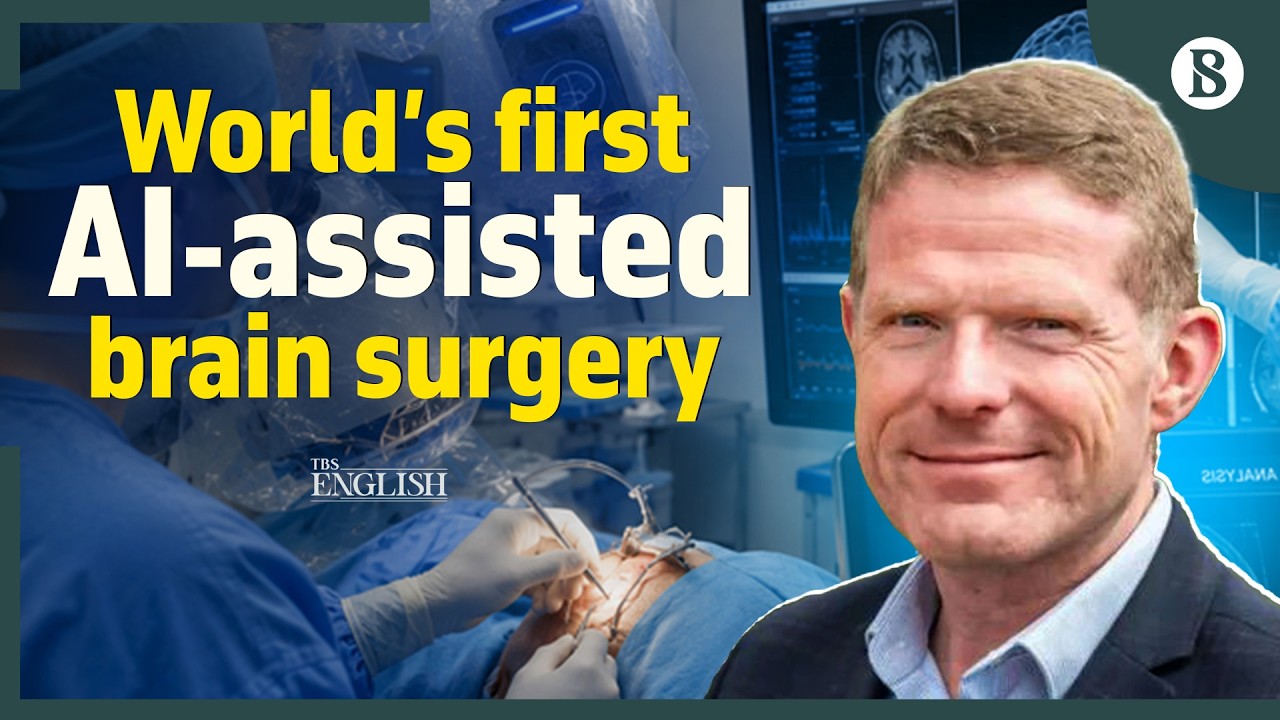
A 48-year-old British man has become the first patient in the world to undergo real-time brain surgery guided by artificial intelligence. The procedure removed a tumour and preserved his sight, University College London Hospitals (UCLH) officials said, Euronews reports .
Rhys Hibbert, from Bedfordshire, was diagnosed with a brain tumour in December 2024 after he collapsed during a walk and suffered an epileptic seizure. As symptoms worsened, Hibbert opted for surgery and volunteered to participate in research that made it possible to use AI technology during surgery. “If patients are not prepared to participate in research, how could doctors ever learn and how could medicine progress?” he said.
Rhys Hibbert, from Bedfordshire, was diagnosed with a brain tumour in December 2024 after he collapsed during a walk and suffered an epileptic seizure. As symptoms worsened, Hibbert opted for surgery and volunteered to participate in research that made it possible to use AI technology during surgery. “If patients are not prepared to participate in research, how could doctors ever learn and how could medicine progress?” he said.
Rhys Hibbert, from Bedfordshire, was diagnosed with a brain tumour in December 2024 after he collapsed during a walk and suffered an epileptic seizure. As symptoms worsened, Hibbert opted for surgery and volunteered to participate in research that made it possible to use AI technology during surgery. “If patients are not prepared to participate in research, how could doctors ever learn and how could medicine progress?” he said.
Asked if he would be willing to be the first patient in the world to have this technology used in real time, Hibbert replied: “I said yes, of course.” According to doctors, the tumor would have continued to threaten his vision and could eventually lead to blindness. The surgery allowed the tumor to be removed and the patient’s vision to be preserved. After the surgery, Hibbert said his vision improved significantly. “When I came to… I could see everything in the room clearly,” the Briton said. How artificial intelligence was used The intervention was carried out at the National Hospital for Neurology and Neurosurgery (NHNN), as part of a clinical trial. The artificial intelligence technology was developed at University College London and funded by the National Institute for Health and Care Research (NIHR). During the operation, the AI analyzed real-time video images from the operating room, rather than relying on scans taken before the procedure. The technology helped the surgical team make more accurate decisions by highlighting important structures at the base of the brain, UCLH representatives explained. In this area, the pituitary gland, which is about the size of a marble, is very close to blood vessels and nerves that control vision. An error of just one millimeter can have serious consequences, including blindness, stroke, or death. AI helped surgeons identify risk areas that needed to be avoided, while safely removing as much of the tumor as possible. The technology could also be used to track surgical instruments and their interactions with tissues, with the aim of supporting doctors during complex procedures and providing them with feedback. “This is an example of AI at its best: patients benefiting from care previously thought unimaginable, thanks to the latest revolutionary technology,” said James Frith, the UK Minister for Health Innovation. He stressed, however, that artificial intelligence needs adequate safeguards and that safety must be treated with the utmost seriousness.
Comments