
Long before tech giants began pouring billions into GPU clusters and synthetic neural networks, a global army of caffeine-fueled human volunteers was doing something radical: building a free, meticulously cited map of all human knowledge.
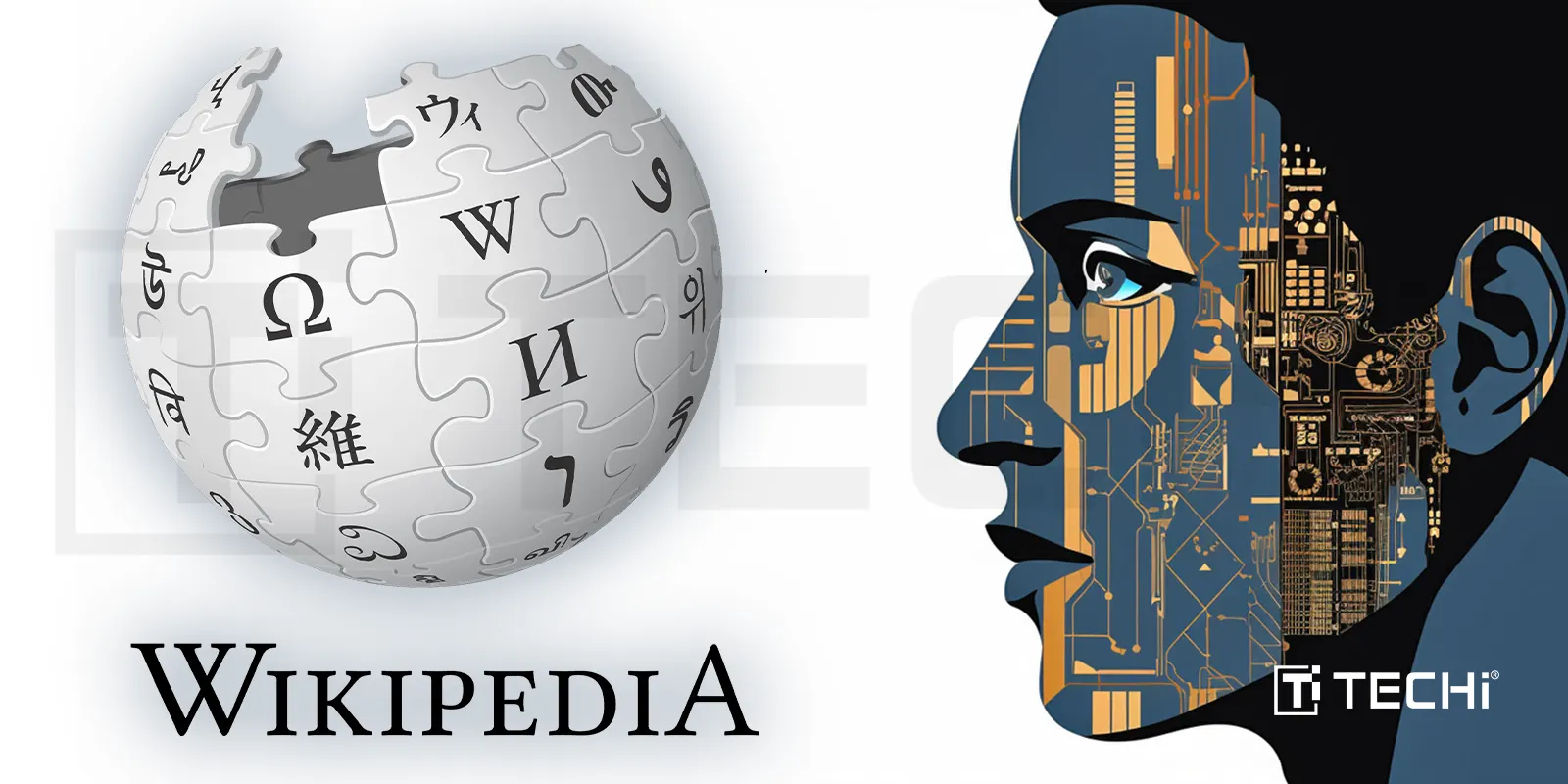
That map is Wikipedia. And it has become the secret sauce behind the artificial intelligence revolution.
The Great AI Feed: From Crowdsourced to Code
When we think of AI training data, we often imagine sleek digital pipelines digesting the entire internet. In reality, the internet is messy, full of broken links, duplicate text, clickbait, and outright fiction.
To turn raw data into actual intelligence, AI models need an anchor of consensus reality. Wikipedia is that anchor.
Because of its strict core policies—like Neutral Point of View (NPOV), Verifiability, and No Original Research—Wikipedia serves as a pristine, highly structured training ground. It provides AI systems with:
Clean taxonomy: Hierarchical categories and cross-references that teach machines how concepts relate to one another.
Multilingual alignment: Millions of parallel articles across hundreds of languages that supercharge machine translation and cross-cultural understanding.
Fact-checking guardrails: Millions of inline citations that help models learn what a valid source looks like.
Without Wikipedia, today’s most advanced AI models would essentially be brilliant students trying to pass a complex exam after studying entirely from random TikTok comments and anonymous forums.
The Symbiotic Paradox: Protector vs. Product
Right now, the relationship between Wikipedia and AI is locked in a fascinating, high-stakes paradox:
The AI relies on Wikipedia to stay smart. Tech companies harvest its text to build smarter chatbots and search overviews.
Wikipedia relies on humans to stay true. Unlike AI, which predicts the next most likely word based on probability, human editors on Wikipedia care deeply about whether that word is actually true.
As a result, Wikipedia communities have adopted strict guidelines regarding AI-generated content. Unchecked AI text and hallucinated citations are heavily restricted or outright banned on the platform to prevent a “digital Ouroboros”—a terrifying loop where AI reads internet text generated by other AIs, slowly degrading into institutional nonsense.
The Wikimedia Foundation’s strategy firmly puts humans first, utilizing automation strictly to help human editors spot vandalism, suggest citations, and remove technical barriers, rather than letting algorithms write the encyclopedia itself.
Why It Matters
We live in an era where AI can generate a synthetic essay in three seconds. Yet, the foundational truth underlying that essay still heavily depends on a 25-year-old human experiment in radical collaboration.
Wikipedia didn’t just democratize human knowledge for people; it inadvertently created the cognitive scaffolding for machine intelligence. Every time you chat with an AI, you aren’t just talking to a multi-billion-dollar corporate algorithm—you are chatting with the distilled collective effort of millions of anonymous human editors typing away in the dark, one citation at a time.
Comments